Maizu
team
Cara Anderson, Sarah Lee
type of work
UX Design
role
UX Designer
timeframe
August - December 2025
Transforming fragmented campus wellness into an integrated digital ecosystem by gamifying habit-building through interactive avatars.
Overcoming "Well-being Fatigue"
Through user interviews at the University of Michigan, we identified a core paradox: while resources are abundant, they are fragmented. For students like Omar, a high-achieving Junior, the mental effort required to find support often exceeds his remaining energy.
"Looking for a yoga class or a therapist feels like just another chore on my to-do list."
We realized that for wellness to be sustainable, it couldn't be another task—it had to be an integrated experience.

PROBLEM DEFINITION
How might we help UMich students build sustainable well-being habits by making campus resources simple, accessible, and manageable?
Maizu transforms wellness from a scattered "chore" into an integrated habit by anchoring our design in 3 North Stars:
DESIGN STRATEGY
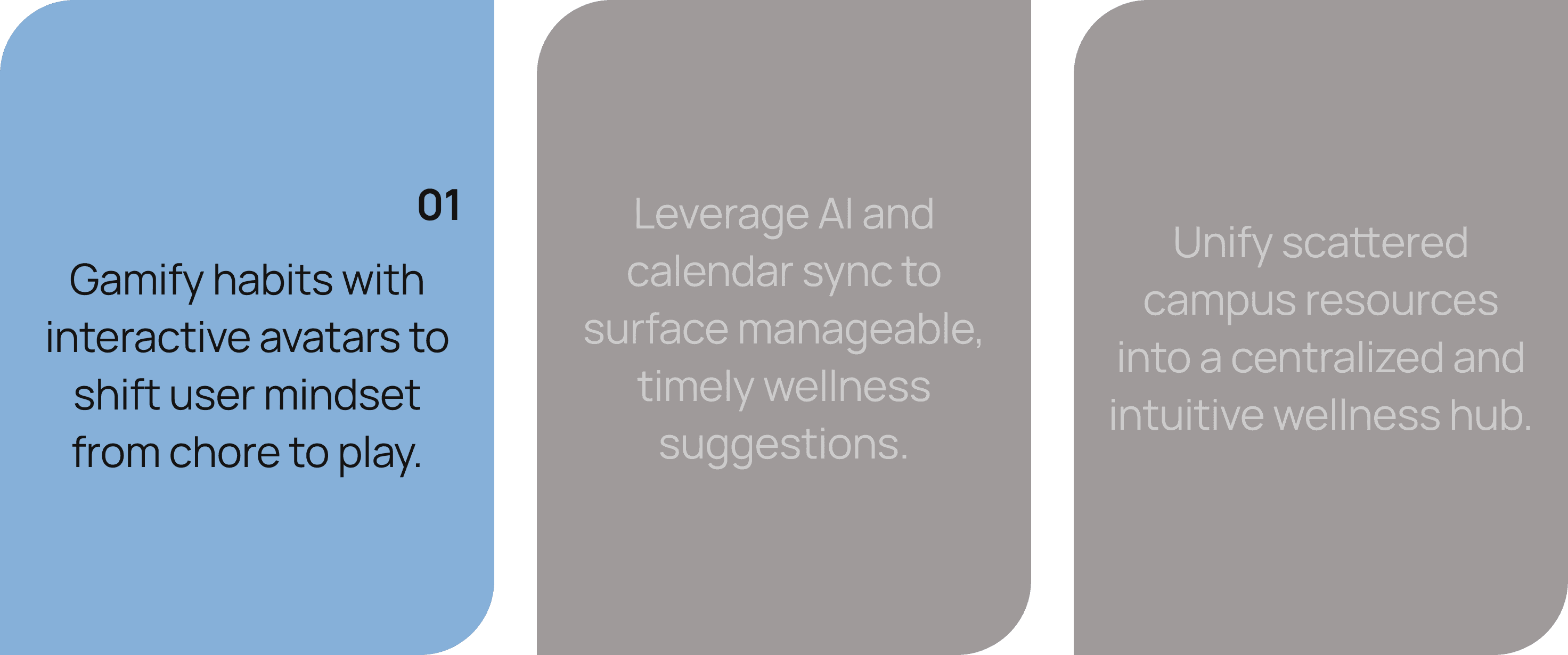
Problem: Students treat self-care as a chore, leading to "Survival Mode" where wellness takes a backseat to grades.
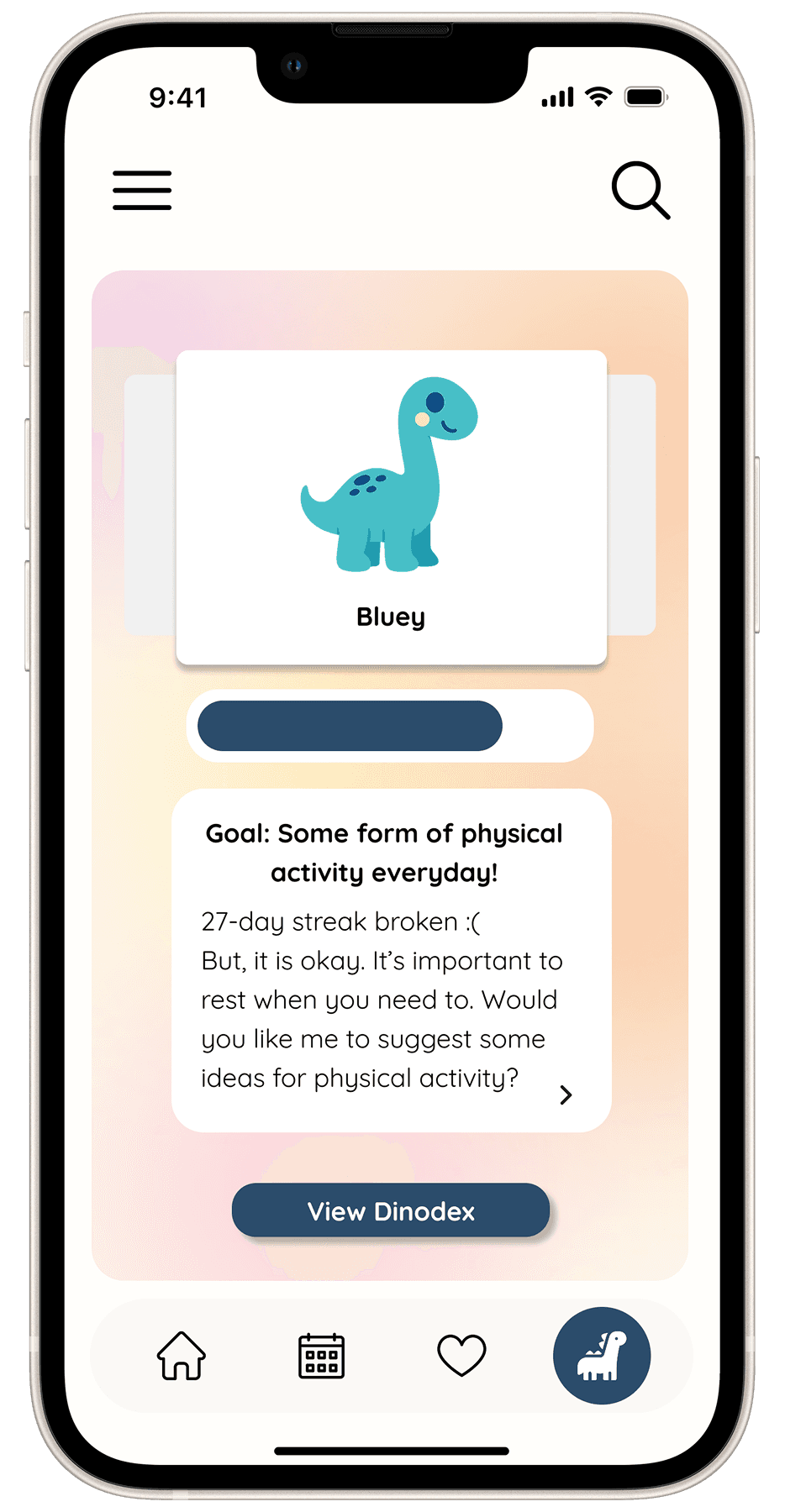
Solution: Avatar Adventure
By linking personal health to a digital companion’s growth, we created an emotional feedback loop. The dinosaurs act as a mirror for the user’s consistency, shifting the psychological burden from obligation to play.
DESIGN STRATEGY
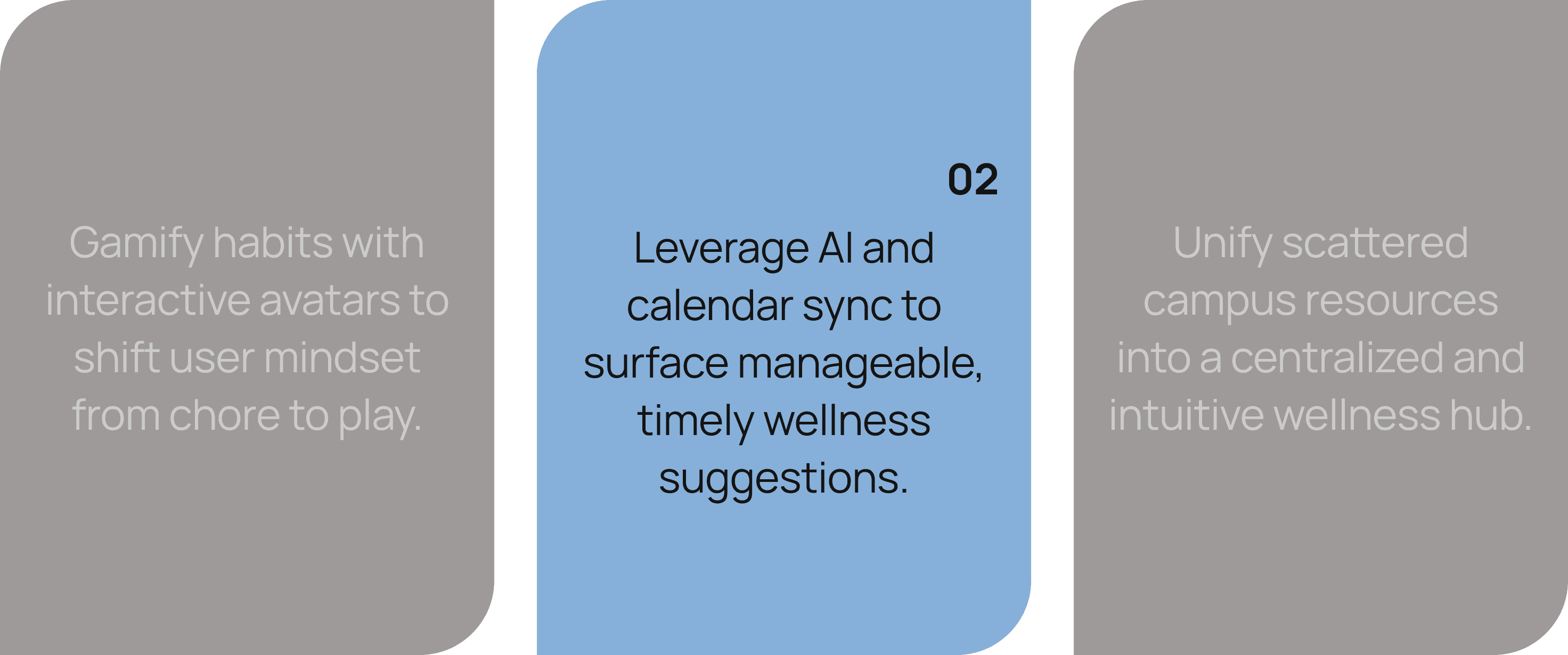
Problem: "Balance" requires constant self-awareness. Students often realize they are burnt out too late and lack the energy to find help.
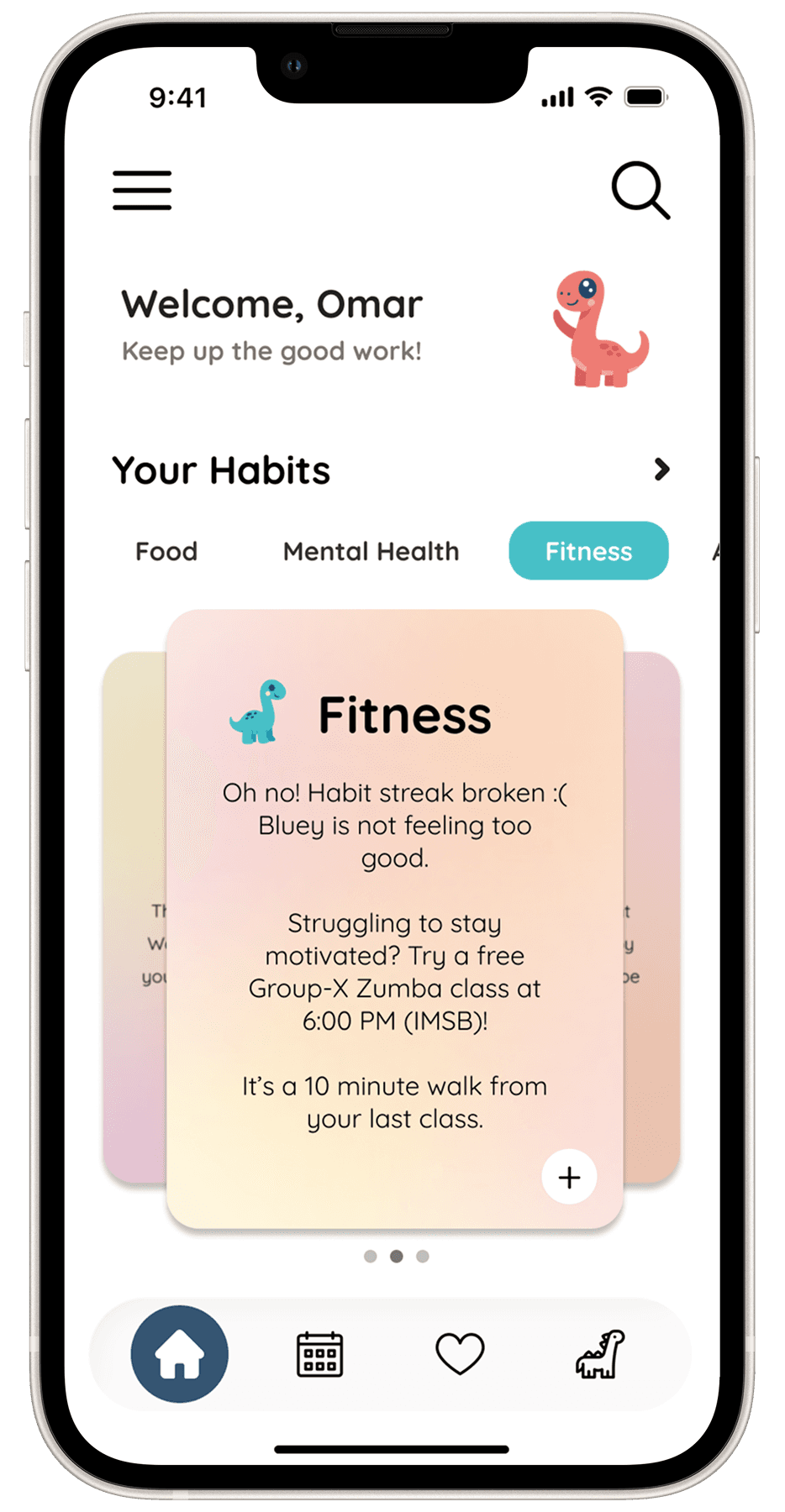
Solution: AI-Powered Suggestions & Calendar Sync
Maizu identifies "out-of-balance" signals and surfaces one single, manageable action. By integrating with Google/Outlook, we move wellness from a mental to-do list into a scheduled commitment.
DESIGN STRATEGY
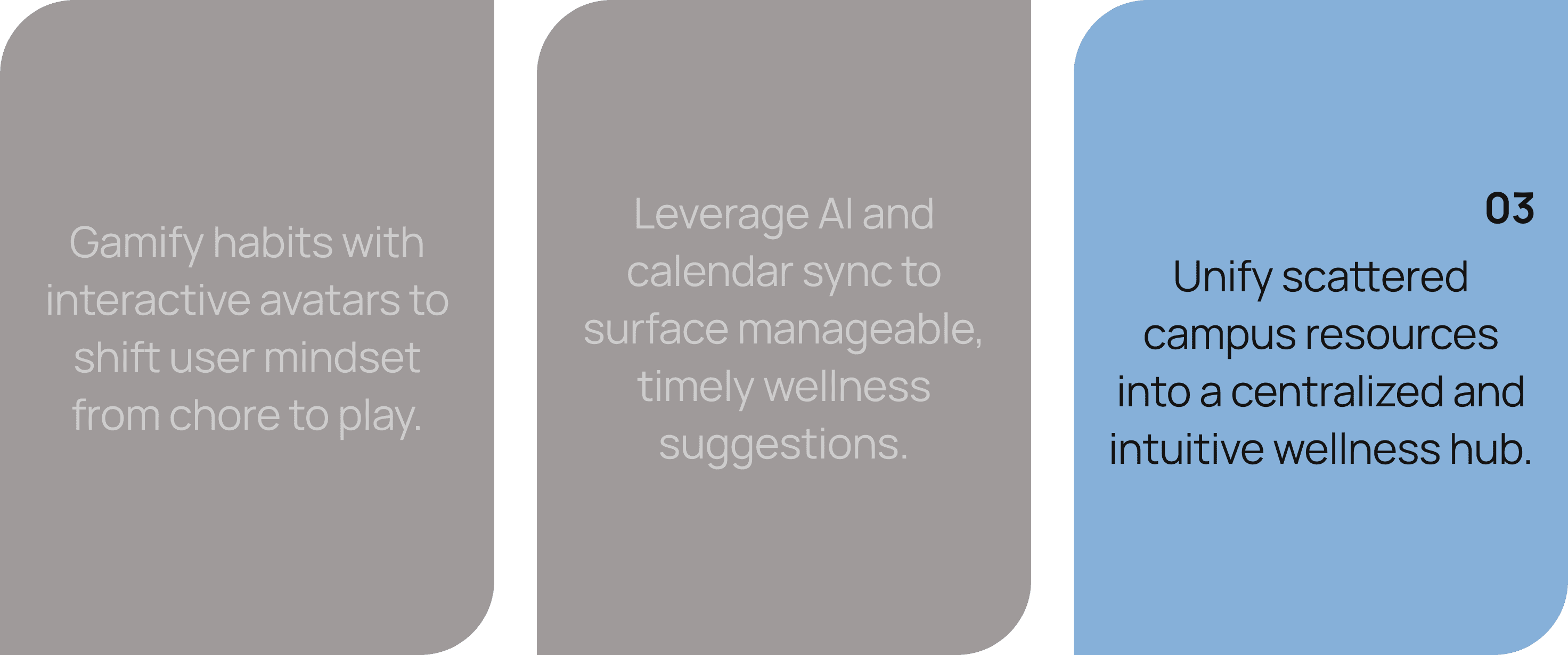
Problem: U-M resources are "abundant but fragmented," creating additional friction for students already struggling with overloaded schedules.
Solution: A Centralized & Personalized Ecosystem
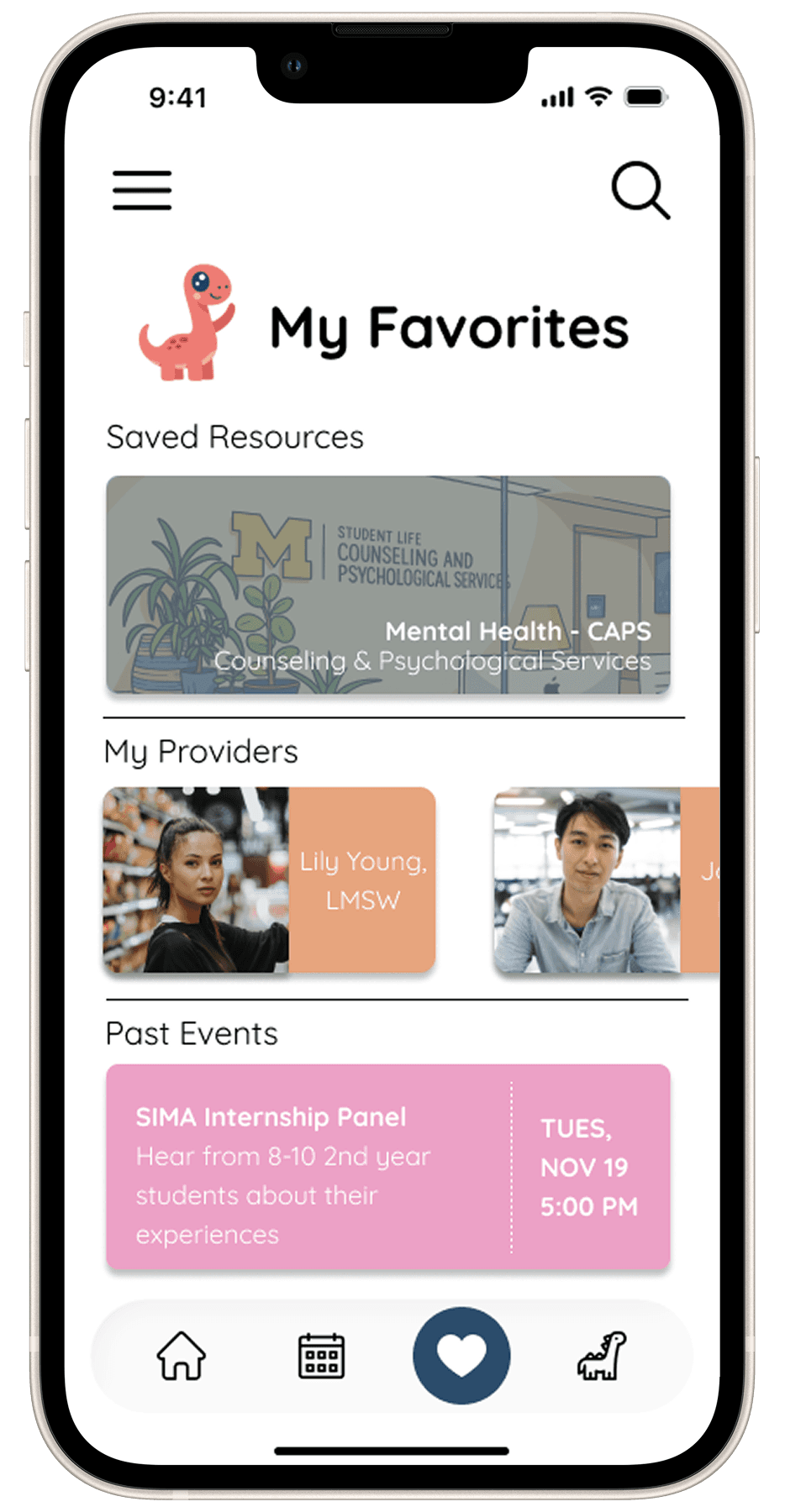
We consolidated scattered campus services into a single, intuitive hub. To further streamline the experience, we integrated a "Favorites" framework, allowing students to save their desired resources for instant access—eliminating the need to navigate the university's fragmented web of links more than once.
DESIGN EVOLUTION:
Moving Beyond the First Pass
Exploring how playful design can make wellness sustainable for busy students.
To ensure Maizu provided real value for students like Omar, I revisited our initial designs after the final presentation tox push the accessibility and usability further.
THE VISUAL IDENTITY
Our color palette incorporates the university’s DNA, but uses a refreshed, vibrant color scheme to differentiate the app from standard campus portals and lean into a gamified, friendly energy.
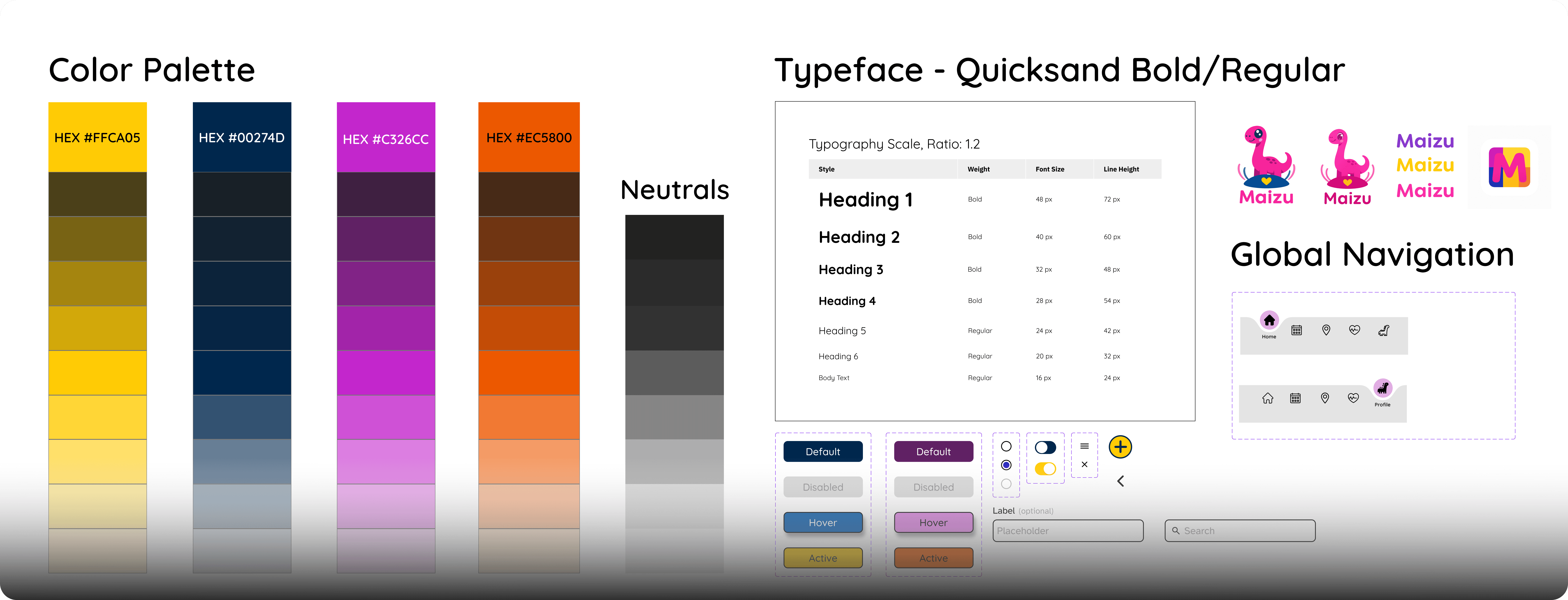
While our initial team phase focused on establishing a vibrant, "Non-Clinical" brand identity, I realized the color implementation didn't yet meet the strict WCAG accessibility standards required for a truly inclusive wellness tool.
After the course concluded, I took the initiative to independently audit and overhaul the UI:
Contrast Correction: I remapped the color pairings to ensure all text and interactive elements pass AA contrast tests
Component Audit: I simplified the Navigation Drawer and refined the global navigation to reduce cognitive load, moving Maizu from a student concept to a production-ready design
STRATEGIC REDESIGN: Independent Audit


CONCLUSION
Maizu reinforced the idea that the best digital solutions don’t just simplify tasks, they support the people behind the screen. This project fueled my passion for purpose-driven design; reminding me that technology should feel human.
WHAT'S NEXT?
WCAG Compliance: I am continuing to refine the palette to ensure full color accessibility while maintaining our playful brand identity.
Expanding the "Dino-dex": Furthering the gamification logic to include social accountability features.